Built with AI / Built with AI · Architecture and housing
What if you could try Chicago's housing choices on a map?
An urban planner used Claude to build a playable city. The interesting part is how it lets you question the assumptions behind the result.
Let taller buildings go up near Chicago's L stations, press “Simulate 15 years,” and watch a different city take shape.
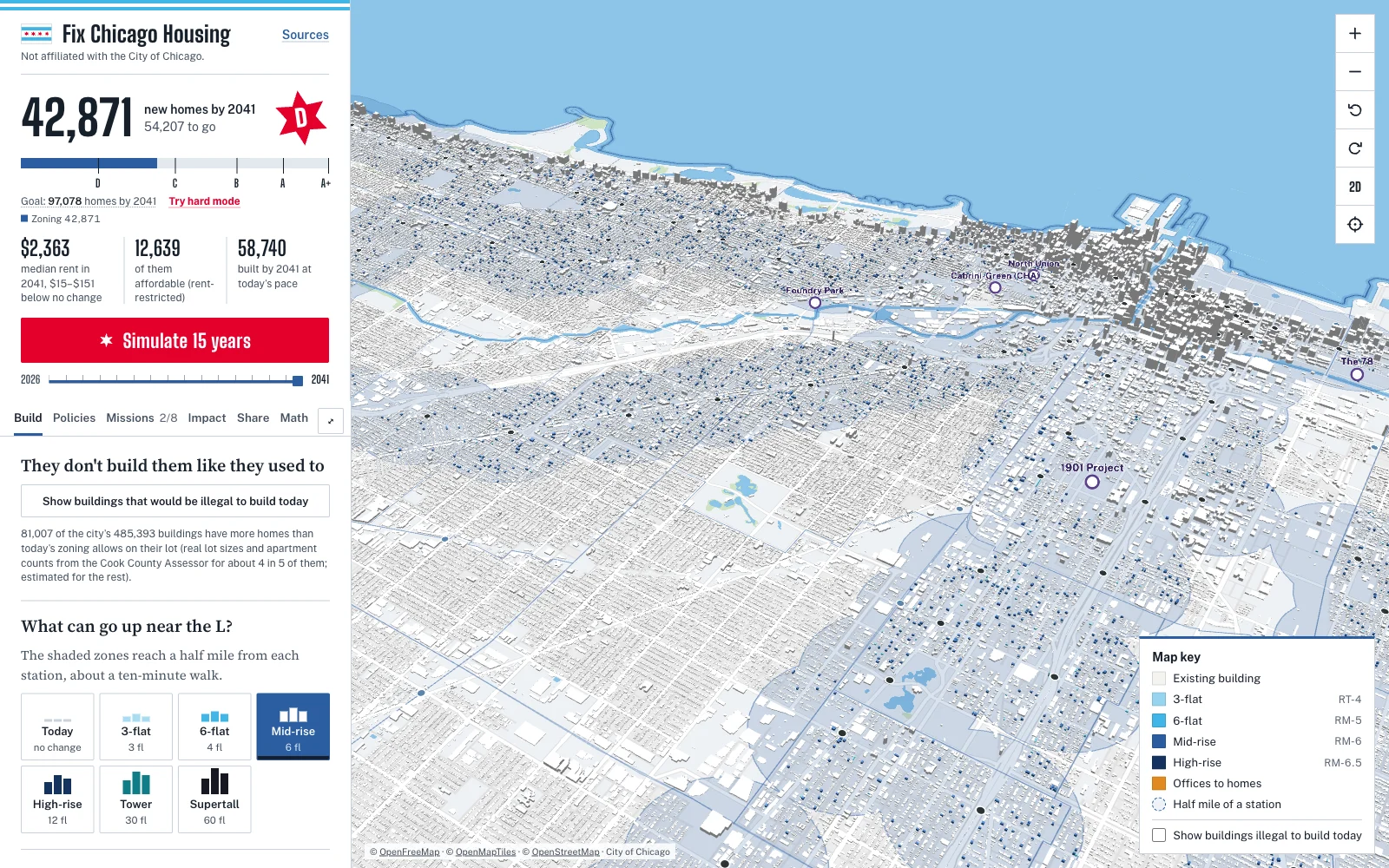
Fix Chicago Housing turns zoning choices into something you can play with. Its 3D map lets you change building rules near transit, try housing policies and inspect the model's estimates of homes and rents. We like the way it makes an abstract argument visible, then puts its assumptions within reach.
The creator, who posts as u/kylef5993, describes a background in urban planning and housing finance, with no coding experience. In the original account, they say Claude wrote the code while they directed the policies, design and revisions over a few days. That's the maker's account of the process. Original post
We revisited the simulator on November 5, selected mid-rise buildings near the L and ran the 15-year simulation. That run displayed 42,871 additional homes by 2041, beyond the game's baseline. The screenshot above shows that scenario, not a forecast of what Chicago will actually build.
The current normal mode asks the city to address its estimated share of the regional shortage. Hard mode asks it to absorb the whole regional gap. The Math tab explains that distinction and labels assumptions about redevelopment and rent effects. It also lists omissions, including construction costs, interest rates and school capacity. We read those explanations; we haven't independently validated the housing model.
It isn't affiliated with the City of Chicago. It's an engaging way to ask what a housing argument assumes, see how those choices affect a map, and then open the sources behind the numbers. Try the project · Creator's repository
Sources
- Try the projectFix Chicago Housing creator
- Original postu/kylef5993 / Reddit
- Creator's repositorySnowBelt93